The influence of gaslight or electric light on the growth of paraheliotropic trees

bonebrushing the edges of the res interna (upper transcend)

Category: Uncategorized

Neil Armstrong and the Moon

Years later, in the 70s and 80s, do you think Neil Armstrong would sometimes look up at the Moon, and miss it like an old lover or old friend —

Before we lived in digital, the people we once knew passed below the horizon of our lives, gone, but not present —

Now, we see them, or their shadows, as Armstrong saw the moon, present but unreachable, unreachably far —

here I am here I am

a home for my heart

acceptance

0 to 8608.

8608 to 8868. (AS). 

8868 to 9202. 

9202 to 9837. (NS) 

9837 to 10993. 

10993 to 11392. (AG)


After it ends, the first thing that happens is you start to remember everything that happened — 

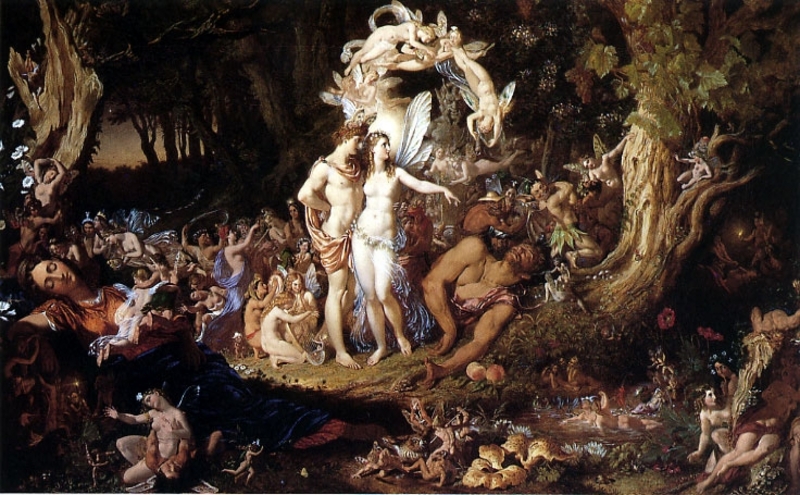
Titania

Image

© Painting by Sir Joseph Noel Paton, 1847. Public domain.

A Midsummer’s Night’s Dream has been described as an epithalamium, a song sung to brides as they are taken to their marriage beds — 

And thus, the play enfolds — it is about lust and love and beauty and danger and way love o’erpowers us completely, the way it is a thing of darkness and of the abyss and of the deep shadowy beauty of the world at night — 

Siren, by Louise Gluck

http://www.poemhunter.com/best-poems/louise-gluck/siren/

I became a criminal when I fell in love.
Before that I was a waitress.

I didn’t want to go to Chicago with you.
I wanted to marry you, I wanted
Your wife to suffer.

I wanted her life to be like a play
In which all the parts are sad parts.

Does a good person
Think this way? I deserve

Credit for my courage–

I sat in the dark on your front porch.
Everything was clear to me:
If your wife wouldn’t let you go
That proved she didn’t love you.
If she loved you
Wouldn’t she want you to be happy?

I think now
If I felt less I would be
A better person. I was
A good waitress.
I could carry eight drinks.

I used to tell you my dreams.
Last night I saw a woman sitting in a dark bus–
In the dream, she’s weeping, the bus she’s on
Is moving away. With one hand
She’s waving; the other strokes
An egg carton full of babies.

The dream doesn’t rescue the maiden.


Shunyākāsha

A world without memory. People respond to stimuli and follow instructions and are fed in return. People kiss and make love and fight and rape – people quiet and feed crying babies, or not and move on, unmoved. People feel joy and pain and fear and hunger and satiety, but do they love?

Are they people? They have thought but not memory. It is always now, and what happens, happens,

Memory comes like a disease, like a long forgotten flaw, a throwback, and the Cassandra’s who speak of it, are scorned, avoided, outcast. They can always return, because no one remembers their shame, and they are outcast again.

When someone dies, it is death for the first time, and the loss is inexplicable, and is pain felt or not? The body is buried. No stone is put there, until one of the Cassandras, who recognized the face of the one who is no longer, places a stone – and inexplicably amongst the people a graveyard is built

One Cassandra seeks to master and exploit, another to love and protect

Difference does not imply Independence

http://www.newyorker.com/online/blogs/books/2013/07/thomas-nagel-thoughts-are-real.html#entry-more

Seems like Nagel (if represented correctly by Brody) misses the point — the fact that consciousness or mentality is different than common physical processes such as electric signalling does not mean that it is independent or that the universe possesses some teleological aim towards consciousness & reason, any more than the phase shift between chemistry and biology means that the universe possesses some teleological aim towards life. 

(If Nagel’s only point is that the universe has to contain the possibility of consciousness for consciousness to exist, fine, but so what?)

There is absolutely no evidence that physics cannot account for mental processes, and that Darwinian evolution cannot account for mental processes. The idea that there is some break between these disciplines is merely the fact that we’ve been able to explore this area of physics with the tools of science for less than 50 years with only the bluntest of instruments. 

We build physical sensors all of the time, and we program our machines to react to such sensors. That process, multiplied 10 billion times, and created and refined by natural selection across the 3.5 billion year history of life on Earth, appears to us as consciousness. 

Just as biology is a special subset of chemistry & physics, ultimately, consciousness will also almost certainly be found to be a special subset of biology, chemistry, & physics. It is something that simply starts to happen when the underlying physics are in place, no different than stellar fusion. 

While that rightfully elevates consciousness to a phenomenon equal in dignity to the shining of the stars, what it does not do is imply a trans-physical independence of consciousness as non-materialist, with the hopes for non-materialist post-life survival of consciousness that such independence might imply. 

Storybank Submission to Elsewhere

George, Stephanie, and I came down to Greensboro on March 1, 2003, for a concert at the Greensboro Colosseum. After the show, George’s uncle allowed a bunch of the young people to sleep in some empty offices on South Elm Street.

We took my parents’ second car, a Green Corolla, and pushed down from Pennsylvania, past DC, past Manassas, past Richmond, and then into and west across North Carolina. Stephanie had a sign made and put in the back of the car window that said Goin’ Phishin’ or something like that.

I remember going to sleep that night on a foam pallet and my sleeping bag. Stephanie’s feet were near my head, and George was off to my right.

The next morning, George got the keys to his grandmother’s store that was across the street and told us to come look a it. He jingled open the door and the three of us walked in — George first, then Stephanie, and then me.

I stopped at the door to look at the books lined up there. Past the door, the things were piled up mostly in large cardboard boxes the height of a man. The lights were off, so in my memory, the building is drained of color.

We crossed from 608 to 606 and there gathered around a few boxes and started going through the things. Clothes I remember, and a cartoon map of the United States — George told us the story of some part-time help who had come in to sort after his grandmother’s death and had absconded with some of the objects — and we decided to do the same — packing up a box.

I took a book from by the front door, the Revolution Betrayed, by Leon Trotsky.

We left the building, and locked it up. George and Stephanie would graduate a couple months later (I had one more year left) and those months were golden — and then they left, and I, a loser-of-people, wondered **really** whether I would ever either of them again.

And way went on to way, and I knew that George had gone down to Greensboro, and I started my senior year, and was lost and mourning the Joe College life I loved, and that Fall, America caught Saddam Hussein hiding in a hole, and everybody joined a Friendster-knock-off that was Ivy League exclusive called Facebook, and one day, at my campus job at a place called the Writer’s House, Stephanie walked in.

We said hi to each other for a minute, and that was that. I had seen her again.

In March, I went down again for spring break, and saw the store for a second time, and learned that it had a name, it was called Elsewhere, and I thought about Sesame Street for some reason, and a show about a hospital from my childhood barely remembered, and we went to Charleston and sat on the beach and sketched constitutions in black-and-white composition books.

And then I went back to school, and finished my nothing-degree, and didn’t know what I’d do next, and went to first one music festival, and then a second, and I went to the second on a whim, because my friend’s friend said that if I didn’t, I’d regret it, and the festival was in Maine, but I didn’t have a ride past Boston, but George and Steph and Steph’s sister were there I know, and I hitchhiked (not really, but almost) a ride to their motel in Braintree, MA and made my case.

Of course, their car was half-filled with Elsewhere — clothes, and sheets, and toys, and books — George looked at that car, and then looked at me, and then looked at the car again, and then Steph said — of course, we’ll make room, we’ll re-arrange the objects — and we did, though it was tight, a wall of objects between each of us, so that the car was divided into four quadrants, like the ventricles of the heart or the hemispheres of the brain —

And up we drove to Maine, and then down we drove to Philadelphia, all the time being tempted to keep on headed south — and they dropped me off and went to spend a day in Allentown, PA, and I said, maybe I’ll call you, before you head back down, and I went to go see about a girl, and I saw about the girl, and that didn’t go well, and I said, what am I doing, let’s get this started, and I called up George and I said “come pick me up” and down we drove and I came to Elsewhere for the third time.

And there I lived, through August, and September, and October, and November, and December, and January, before I left again.

Elsewhere was quiet then. There were few of us. Sometimes, it was me by myself in that great big building. One night, I wrestled with two ghosts, and won from them a blessing. Another night, late, a homeless young couple walked by, and saw that the lights were on, and knocked on the door, and asked me what this place was, and asked if they could stay there. What hardness, to tell them that they couldn’t — and they went on their way, the man leaving a blue toy car among the collection.

I left. Everybody leaves eventually. I came back, time, and time. Each time, there were new people — new artists, new curators; each time, it was completely different — each time, it was exactly the same.

George and Stephanie never left. Where I have seen Elsewhere in flashes, in bursts, punctuated by my changing life in the real world, as I went from 20 to 30, they saw the whole thing — for me, Elsewhere was like a stop-motion animation, a Zoetrope — for them, it was real-time, high-definition, a living organism —

Still, every time I return a little bit of that first day comes back — maybe it’s the high ceilings, or maybe it’s the shock of color, or maybe its the smell or maybe its the dust — far less now, but still there, still there — and I think about the passing of time, and of all the times I’ve come to Elsewhere.
The Birth of God

To Be is to Be Perceived. 

Or rather, To Be Said to Be Is to Be Percieved; 

Or modally, To Be Is to Be Perceivable by Perceivers; 

To Be Is to Perservere

———

Some have described Beings as Thought Thinking Itself. Signal and Receiver. Made from Matter. Lightning. Lightning across and through the salt water of our blood.

We are Ocean and we are Lightning, Walking Where We Will. 

We are the Water, and we are the Air, and We are the Earth, and We are the Fire. 

And the last. The Quintessence. 

The Attribute of Existing. 

—–

That Which Allows Being — 

The Necessary — 

—————

And to think — thought, thinking, organizing, looking at the crawling creeping of all the beasts of the earth and the all the monsters of the sea — added and subtracted, and organized and categorized, and placed their lightning in channels and recording the thunder of that lightning on stone and bark and in the vibrating air of their singing — held — ephemeral – and then imprinted in the earthwaterfire of the Others — 

and came to rest, at last, upon the Necessary — 

Not the world. Not the creation. But the necessary. 

And named the Necessary — God. Man found God in a Garden, and Walked With Him, and Learned to Hear His Speech. 

The Great Translation of the Word of God 

———————-

There can be only One God because there is only One Necessary. The Necessary is In All Things, and Makes All Things, but It is Not All Things — 

Whether to worship the Necessary is a choice. It is hard & painful to worship the Necessary, and w/ the Last Temptation of Christ, we are given a choice — we are given the False, we are given the Dream, we are given the Imagined — 

and thus, every one, each to each, who worships Heaven or who worships Bearded Ancients, or Imperious Faces, who believes in Speaking Donkeys and Resurrections — they worship False Idols. 

There is no proof of the Necessary, and there is endless Proof. But we go through this world secretly in the Dark — in the Dark of our skepticism, in the Dark of the Abyss between the Real and our Perceptions — never knowing for sure — 

we can cross the abyss — easily — 

but we must choose to cross it. 

—————

The world is worth nothing if it is False. 

It is worth everything if it is Real. 

In the Garden, before we ate the Tree called Doubt, before we reached for song and metaphor and tale and myth, before we fell in with Liars and Cheats — we never doubted. 

But when the doubt came, the answer had to come. Answers upon answers. The False World of the Gnostics. Of the Indians. The idea that all these constructs and edifices, these artifices, are false — 

Apollo is a lie. He is the Son of Morning. 

The true god is the Necessary Truth, the Foundational Real.

—————