Metaphorically
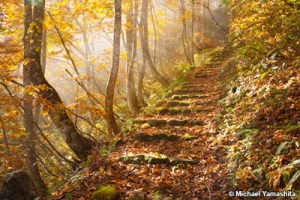
Waves dance, flames leap, winds play, trees whisper, stones witness.
– FELIPE FERNANDEZ ARMESTO, IDEAS THAT CHANGED THE WORLD 18 (2003)
Waves dance, flames leap, winds play, trees whisper, stones witness.
– FELIPE FERNANDEZ ARMESTO, IDEAS THAT CHANGED THE WORLD 18 (2003)
from Wikipedia
Gyrovagues (sometimes Gyrovagi or Gyruvagi) were wandering or itinerant monks without fixed residence or leadership, who relied on charity and the hospitality of others.The term, coming from French, itself from Late Latin gyrovagus: gyro- (circle) + vagus (wandering), is used to refer to a kind of monk, rather than a specific order, and may be pejorative as they are almost universally denounced by Christian writers of the Early Middle Ages. They were denounced as wretched by Benedict of Nursia, who accused them of indulging their passions and cravings. Augustine called them Circumcelliones (circum cellas = those who prowl around the barns) and attributed the selling of fake relics as their innovation. Cassian also mentions a class of monk, which may have been identical, who were reputed to be gluttons who refused to fast at the proper times.Up until the time of Benedict, several attempts had been made by various synods at suppressing and disciplining monks who refused to settle in a cloister. With the establishment of the Rule of St. Benedict in the 8th century, the cenobitic and eremitic forms of monasticism became the accepted form of monasticism within the Christian Church, and the wandering monk phenomenon faded into obscurity.
Legacy
After the eighth century, the term Gyrovagi was sometimes used pejoratively to refer to degenerate monks within a monastery, or to travelling salesmen.
Johnny Appleseed, eternally eighteen inside his wrinkled aging body-suit, his sack of apple cores slung low over his back — walking the hills and valleys of the Great Western Valleys, the long vistas of the Ohio River Valley — and at night, flesh in hand, spreading his seed general over the cold rich quiet land.
Grown men quoting Sun Tzu to each other while they give each other handjobs under the table.
“Now, not just anybody could buy this film. It cost $5 per roll and had to be sent back to Rochester, New York for development. By comparison, in 1938 Congress established the first minimum wage at 25 cents per hour. $5 represented half a week’s work. But the Farm Security Administration sent out about a dozen photographers with this new film. Commercial photographer, Samuel Gottscho, and well-to-do amateur, Charles Cushman embraced this new technology, as well.”
Moore’s paradox is that it is absurd to make statements like “It’s raining outside but I don’t believe that it is”, even though they are often true (e.g. if the weather forecast is wrong).
The paradox is named after G. E. Moore, who discussed it once in a lecture[citation needed]. It is said that when Ludwig Wittgenstein heard about it that evening, he rushed round to Moore’s lodgings, got him out of bed and insisted that Moore repeat the entire lecture to him. Wittgenstein reportedly considered it Moore’s most important contribution to philosophy, and devoted numerous remarks to it throughout his later writings, which has brought the paradox the attention it might otherwise not have received.
August 20, 1997, Philadelphia PA, Mann Music Center (Day 5538)
In this poor body, composed of one hundred bones and nine openings, is something called spirit, a flimsy curtain swept this way and that by the slightest breeze. It is spirit, such as it is, which led me to poetry, at first little more than a pastime, then the full business of my life. There have been times when spirit, so dejected, almost gave up the quest, other times when it was proud, triumphant. So it has been from the very start, never finding peace with itself, always doubting the worth of what it makes . . . All who achieve greatness in art — Saigyo in traditional poetry, Sogi in linked verse, Sesshu in painting, Rikyu in tea ceremony — possess one thing in common: they are one with nature.
— Basho, Records of a Travel-Worn Satchel