http://www.nybooks.com/articles/23726
Daniel Mendelsohn questions what he sees as an inconsistency in Cameron’s work: stories that are ostensibly about triumphing over technology, but in the end celebrate that technology. He quotes Linda Hamilton (who played Sarah Connor) as saying: “Cameron is almost certainly on the side of the machines.” And of course the Terminator films end with man defeating machine by becoming machines — first with Kyle Reese, who promises to push himself as far as the cyborg (John Henry), and then in the sequel, with the Terminator’s doppelganger himself, a robot servant, a golem, who has learned to feel.
Mendelsohn ties this back into Wizard of Oz, and the revelatory moment at that film’s center where Dorothy realizes the smoke and mirrors are just that, that the technology is a lie — and Mendelsohn wonders about how a movie like Avatar, in which the technology is ever-present (even as it tries to erase its presence), can really celebrate pop-ecology.
In some ways, Mendelsohn, is right. The New World, which simply filled actual beautiful untouched land, is a stronger film in showing people what we’ve done to the land. However, other than by becoming Super Green Neo-Cavedwellers, it does not offer us much hope. Avatar on the other hand does offer us a certain hope, contained in the Sigourney Weaver exhortation that the Na’vi are not primitives but actually far advanced — that their biological technology is so advanced that it is hidden from us, that this retreat of technology back into the world has brought the Na’vi into balance with existence.
And this may explain Cameron’s hope — to move past the Modern Disruption in which we are both divorced from nature and divorced from our technologies — totally alienated, locked into our own little existential cages of being — little boxes — to one where accept technology as part of the world, accept ourselves as part of the world — cf. Zen and the Art of Motorcycle Maintenance, where he talks about this divorce between classical and romantic worldviews — one group focusing on tools, the other on nature — and proposes, as the solution, the Contemplation of Unity, of Existence. I believe, though I do not know, that Heidegger has something to say about this as well, in that our contemplation of Being is inextricably bound up with our Experience of Using, of Tools.
Mendelsohn also laments that whereas at the end of Wizard of Oz, Dorothy wakes up in black-and-white Kansas, telling us, it’s ok, there’s stuff to love here too, in Avatar, Jake leaves the human world behind. He assumes this is part of Cameron’s general disdain for the human. Again, that seems wrong, and seems to be part of this pat literary fiction prejudice for ending where you began, like S.E. Hinton’s The Outsiders‘ beginning and ending with the same line. A to A. Frodo returns to the Shire, lessons learned.
This prejudice for circular endings is a dangerous one — one we tell to children, that journeys always end in homecomings, that Daddy always comes home from work, that the sun will rise tomorrow. No one believes in circles. They’re not even real. Even the Hindus and Buddhists who believe deeply in circular time see it as a trap, as a literal hell, with paradise being an escape from circles and an end to existence. The Universe we know will one day die. So, too, will we.
So no circles. A true story takes us not from A back to A, but from A to B. A true journey takes us somewhere else. You never step in the same river twice, a river’s always flowing. And in the real Wizard of Oz, Oz was not a dream, and in the sequels, Dorothy went back there, and lived there forever, always having new adventures. Frodo too; his return was failure, and he remained unhappy until the day Gandalf knocked again on his door and took him to the straight road to Valinor.
We cannot go back. The only reason there are six billion humans on this planet is because of technology, and the only way there can continue to be six billion humans or nine billion or twelve billion humans on this planet is through technology. Hesitant, fumbling, like a baby, we have banged around with our simple tools, making advances and mistakes with every new season and generation.
And we cannot stay where we are. The ground on which we stand is crumbling. Technology is the problem. Technology must be the answer. The question then is what technology? What will our technology look like? Big black smokestacks? Or a canopy of trees?
We must do better. We are starting to wake up. We are starting to look ourselves in the mirror — this is one of the effects of the Great Media Net, the Intertubes, that Michael Crichton warned would be the death of individual human thought. Maybe so; If so, so be it. We cannot limit ourselves to being individuals anymore. We are here, connected. We are here, together. We must move forward, together. Our technologies will become more beautiful. They will disappear from view. We will live in the world, not apart from it.
We should not be disgusted by technology. Technology is merely the recontextualized next iteration of fingers and hands — and we are, most of all, the handed. I sit here now, in a building built by hands, using an electrical device designed by hands and assembled by hands, using my hands to record thoughts in visual shapes.
We plant our gardens by hand. We deliver babies into the world by hand. We touch our lovers with our hands.
We are humans. We use our hands.
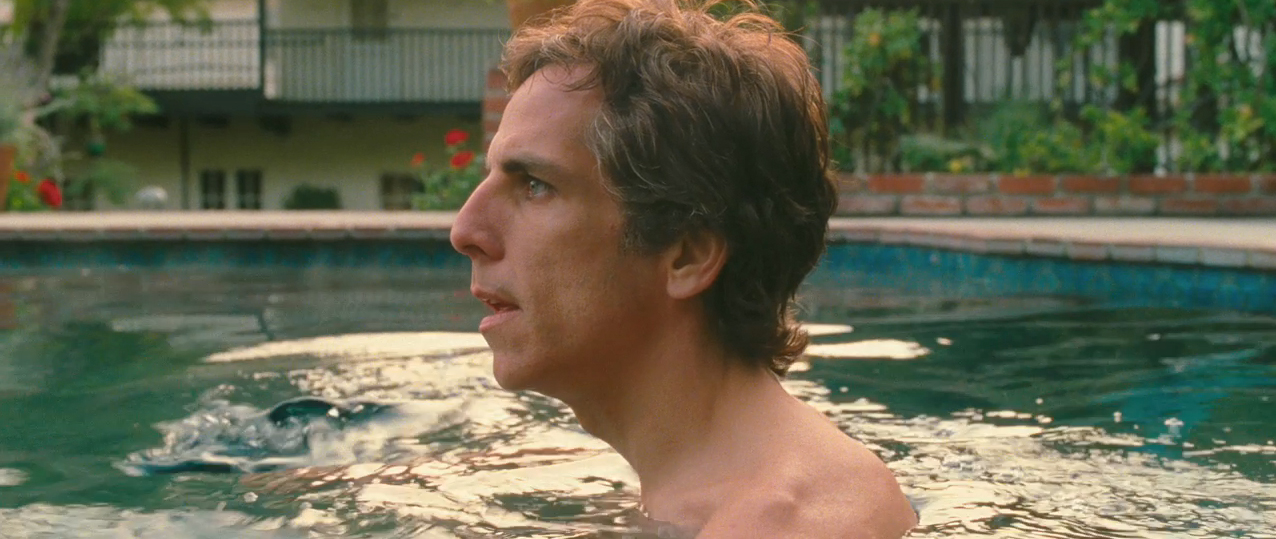 Greenberg sits to pen a letter to American Airlines, and suddenly I remember reading something about this book somewhere that told its story like that. Hmm. Curious. You know, I went to this movie thinking I was Greenberg — I don’t think I am — Greenberg’s a huge asshole, I’m usually not one, I tend to ignore people a little, I guess, self-defeating, lingering on the past, uncomfortable about getting mixed up into other people’s shit — do I hate people, though? Not really — I actually think I’m somewhat sympathetic of other people’s shit — GS’s shit, and MB’s shit, and ZR’s shit, absolutely, and the girls in my life’s shit — and I hate the shitty things I do —
 The influence of gaslight or electric light on the growth of paraheliotropic trees